
Yondo Wellness shares practical, down-to-earth guidance on yoga and mindful living for uk readers for readers across the UK.
- 0123456789
- Angle Bd Abdelmoumen & rue soumaya, Résidence
- [email protected]
Yondo Wellness shares practical, down-to-earth guidance on yoga and mindful living for uk readers for readers across the UK.
 By Emily Hartley
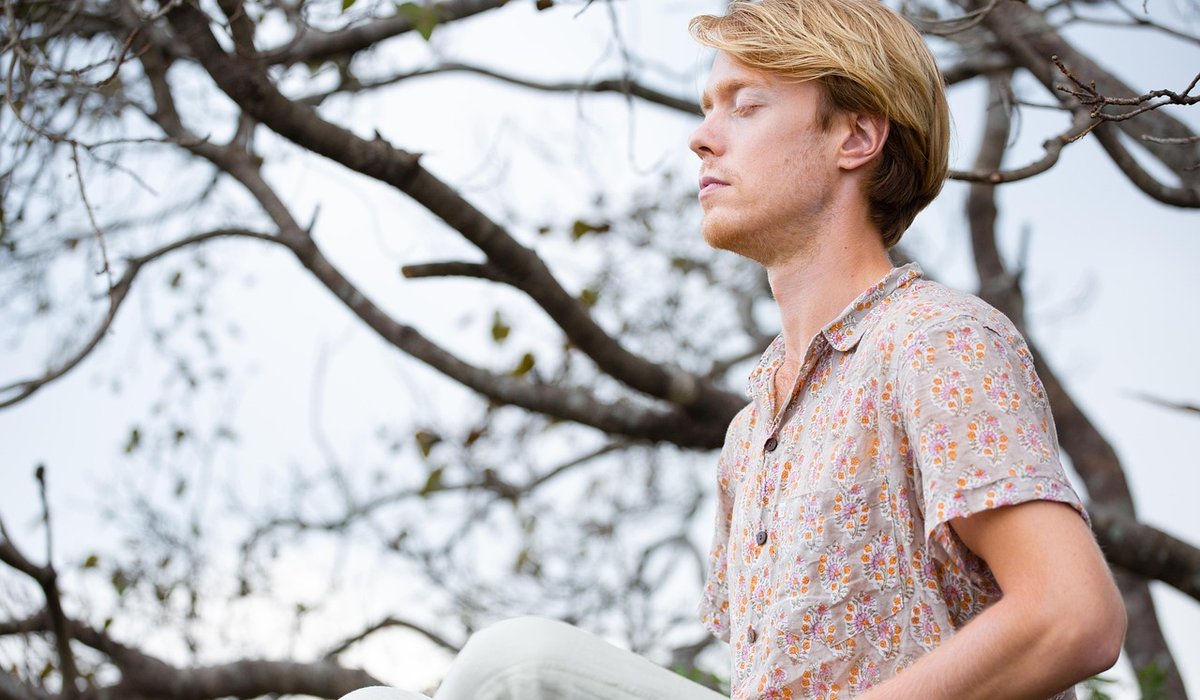
If you spend your working day in a chair, your hips rarely get to do what they were designed for. Hip flexion, rotation and extension all happen in a narrow range, hour after hour. Over time the hip flexors at the front stay short, the glutes at the back switch off, and the deep rotator muscles hold a low-level guard you probably never consciously notice.
This is why one aggressive stretch rarely brings lasting relief. The tissue adapts, but so does your nervous system, which decides how much range feels safe. Gentle, repeated, seated movement tells your body that length is safe again. It is not dramatic, but it is effective — and you can do it at your desk, on the sofa, or in a chair at a yoga class.
Get the foundation right and everything else follows.
Take three slow breaths before you move — in through the nose, out through the nose, with the exhale a little longer than the inhale.
Hold each for five slow breaths, or longer if it feels good. You are looking for a mild, spread-out sensation, never a sharp pinch at the front of the hip or a shooting feeling down the leg.
Consistency beats intensity every time. Set a timer, or let your breath be the clock.
Do this once a day, ideally late afternoon when sitting has settled into your tissues, or in the evening while the kettle boils. Two weeks in, most people notice they can rise from a chair without that first stiff step.
Stretching without attention is simply mechanical. The mindful part is noticing without judging. Which side feels different? Where exactly do you meet resistance — the front of the hip, the buttock, the lower back? Is your jaw clenched? Are you holding your breath?
You do not need to fix anything. Observe, soften the unnecessary effort, and let the exhale do the work. It is the same skill you use when an email winds you up or you are stuck on the M25: notice, breathe, choose your response rather than reacting. Ten minutes on a chair becomes a genuine daily reset.
Hips respond best to patience, but there are times to stop and seek advice. Speak to your GP or a physiotherapist if you have sharp pain in the groin or hip joint, pain that wakes you at night, numbness or tingling down a leg, or if you have had a hip replacement or recent surgery — get clearance first.
To progress, add time rather than force: hold each pose for eight to ten breaths, add a second round in the evening, or deepen the figure four by folding a little further. Never bounce, never push into pain, and always keep the breath slow and easy. Your hips will thank you — quietly and gradually.


We are not gonna make spamming
